Cocoa comes in a wide range - beige to deep brown to nearly black. Black cocoa sits at the far end of that spectrum, and it's the one bakers reach for when they want a dark bake to actually look the part.
What is black cocoa powder?
Black cocoa is a Dutch-process cocoa that's been heavily alkalized. That extra alkalizing does two things: it drives the color from ordinary brown all the way to a dramatic near-black, and it smooths out the sharp, acidic edges you get from natural cocoa. The result is an intense chocolate flavor that stays smooth rather than bitter. It's best known for color - that deep tone in cookies-and-cream bakes and classic chocolate sandwich cookies is black cocoa doing the work.
The color comes straight from the cocoa - so you can lean on little to no added food coloring for your darkest bakes.

How is black cocoa made, and why is it so dark?
Every cocoa starts the same way: beans are fermented, dried, roasted, and pressed to remove much of the cocoa butter, leaving a solid cake that's milled into powder. What sets black cocoa apart is one extra step, done harder than anywhere else on the shelf: alkalizing, also called Dutching. The cocoa is treated with a food-grade alkaline solution that raises its pH, and black cocoa gets the most intensive version of that treatment. As the pH climbs, the natural pigments darken from brown toward deep red and finally near-black, and the sharp, fruity acids are neutralized - which is why it reads smooth, not bitter. The color isn't a coating or additive; it's the cocoa itself, taken to the far end of the alkalizing scale.
What does black cocoa taste like?
Intense, but smooth. Heavy alkalizing mellows the natural acidity, so black cocoa reads deep and roasty without the tang or bitterness of raw natural cocoa. That intensity is why you use it sparingly - on its own it can taste one-note, which is why many bakers blend it with a standard Dutch-Process cocoa for both the color and a fuller chocolate flavor.
TEST-KITCHEN TIP
For the best of both worlds, blend black cocoa 50/50 with Dutch-Process cocoa. You keep the dark color and gain a rounder chocolate flavor.
Natural vs Dutch-process vs black cocoa: how do they compare?
| Natural Cocoa | Dutch-Process Cocoa | Black Cocoa | |
|---|---|---|---|
| Color | Light reddish-brown | Warm medium-to-deep brown | Near-black |
| Acidity (pH) | Acidic (~5-6) | Neutral to alkaline (~7-8) | Most heavily alkalized |
| Flavor | Bright, fruity, sharp | Rounded, mellow, full chocolate | Intense yet smooth, low-acidity, faintly roasty |
| Pairs with | Baking soda | Baking powder | Baking powder |
| Best use | Recipes built around baking soda | Everyday cakes, brownies, frostings | Dark color + depth; blend with Dutch-process |
The row that trips bakers up is leavening: natural cocoa is acidic and reacts with baking soda for rise; both Dutch-process and black cocoa are alkalized and won't reliably do that.
How do I bake with black cocoa? (baking soda vs. baking powder)
Natural cocoa is acidic, so it reacts with baking soda to create lift. Black cocoa is alkalized and far less acidic, so it won't reliably react with baking soda. If your recipe leans on cocoa-plus-soda for rise, swapping in black cocoa can leave you flat. The fix: most black cocoa recipes use baking powder, which brings its own acid and base.
- Recipe calls for baking soda: use black cocoa only in small amounts, or add baking powder to cover the lift.
- Recipe calls for baking powder: you're set.
- Recipe has no leavener (brownies, some cookies): no problem - color and flavor are all you're after.
How much black cocoa should I use?
Start on the low end and work up. Replacing part of the cocoa in a recipe (rather than all of it) darkens color and deepens flavor without overwhelming the bake. For a true jet-black finish, black cocoa gets you most of the way and a small amount of black food gel closes the gap. For frostings, mix in the black cocoa and let it rest 24 to 48 hours - it keeps darkening as it sits.
What can I substitute for black cocoa powder?
If you're out, reach for Dutch-Process cocoa first - closest on flavor and leavening, though you'll lose some near-black color and depth (a little black food gel closes the color gap). Natural cocoa is trickier: more acidic and lighter, so a straight 1:1 swap can change both color and rise, especially with baking soda. What black cocoa does best - dark color with smooth, low-acidity flavor - is hard to fully replicate.
How do I store black cocoa powder?
Shelf-stable and low-maintenance. Keep it airtight, cool, dry, and dark - a pantry shelf away from the stove. Skip the fridge/freezer: humidity swings invite clumping and dull the flavor. If it clumps, sift it and it's ready to bake.

What can I make with black cocoa?
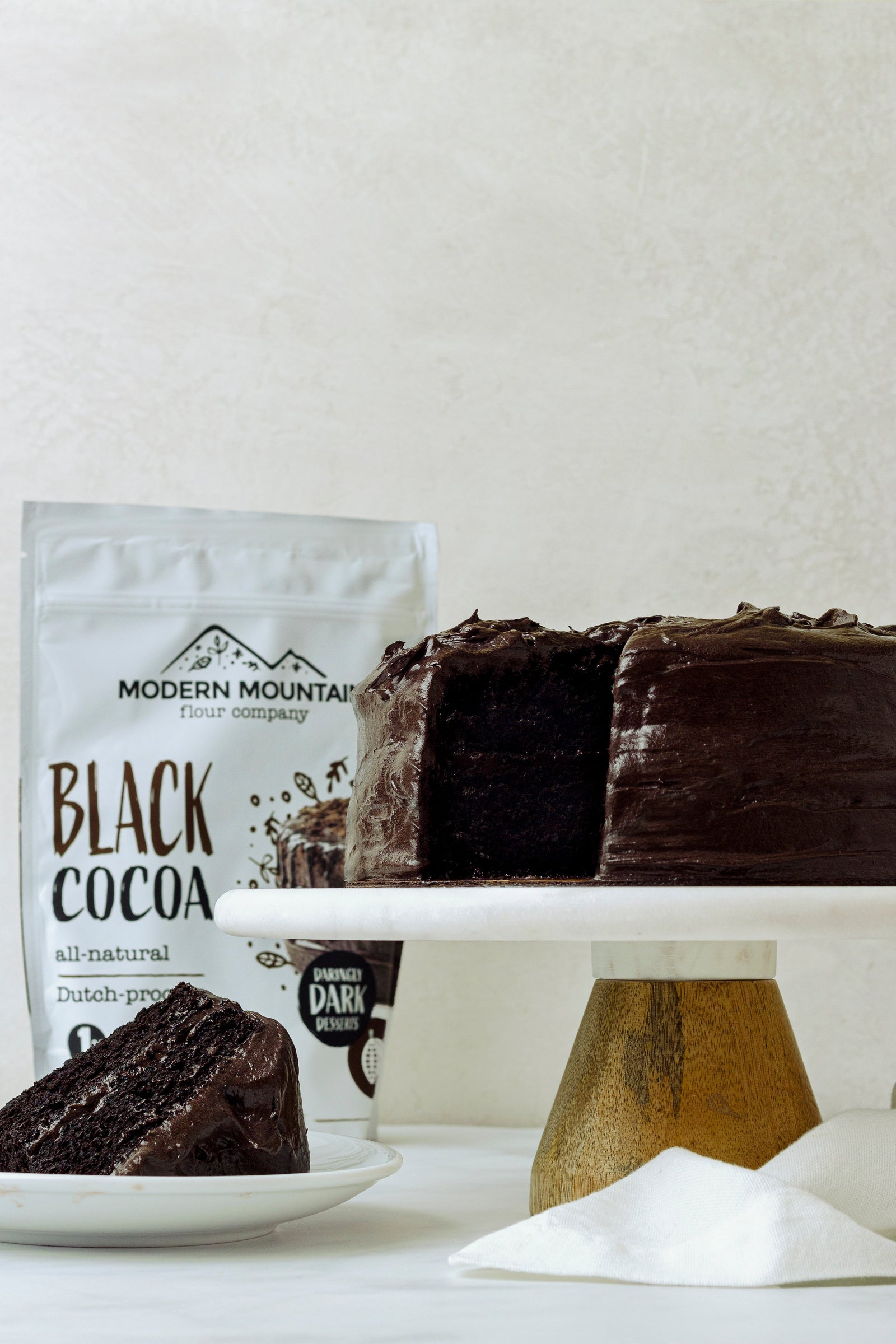
- Black cocoa cake with chocolate cream cheese frosting
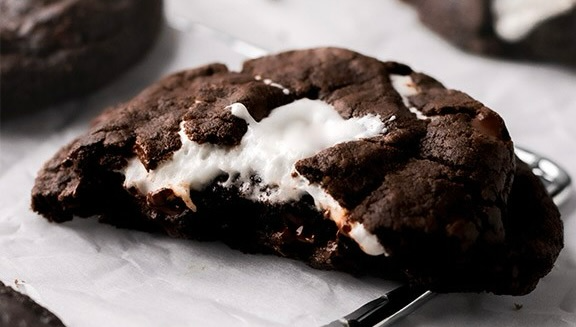
- Chocolate marshmallow cookies
- Cookies-and-cream bundt cake
- Homemade chocolate sandwich cookies
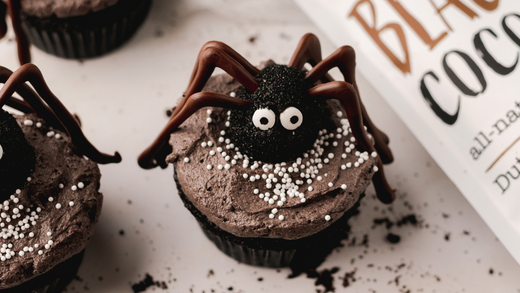
- Spooky spider cupcakes
- Mocha brownie pizza
Reach for Modern Mountain Black Cocoa when you want a bake that looks as dark as it tastes.