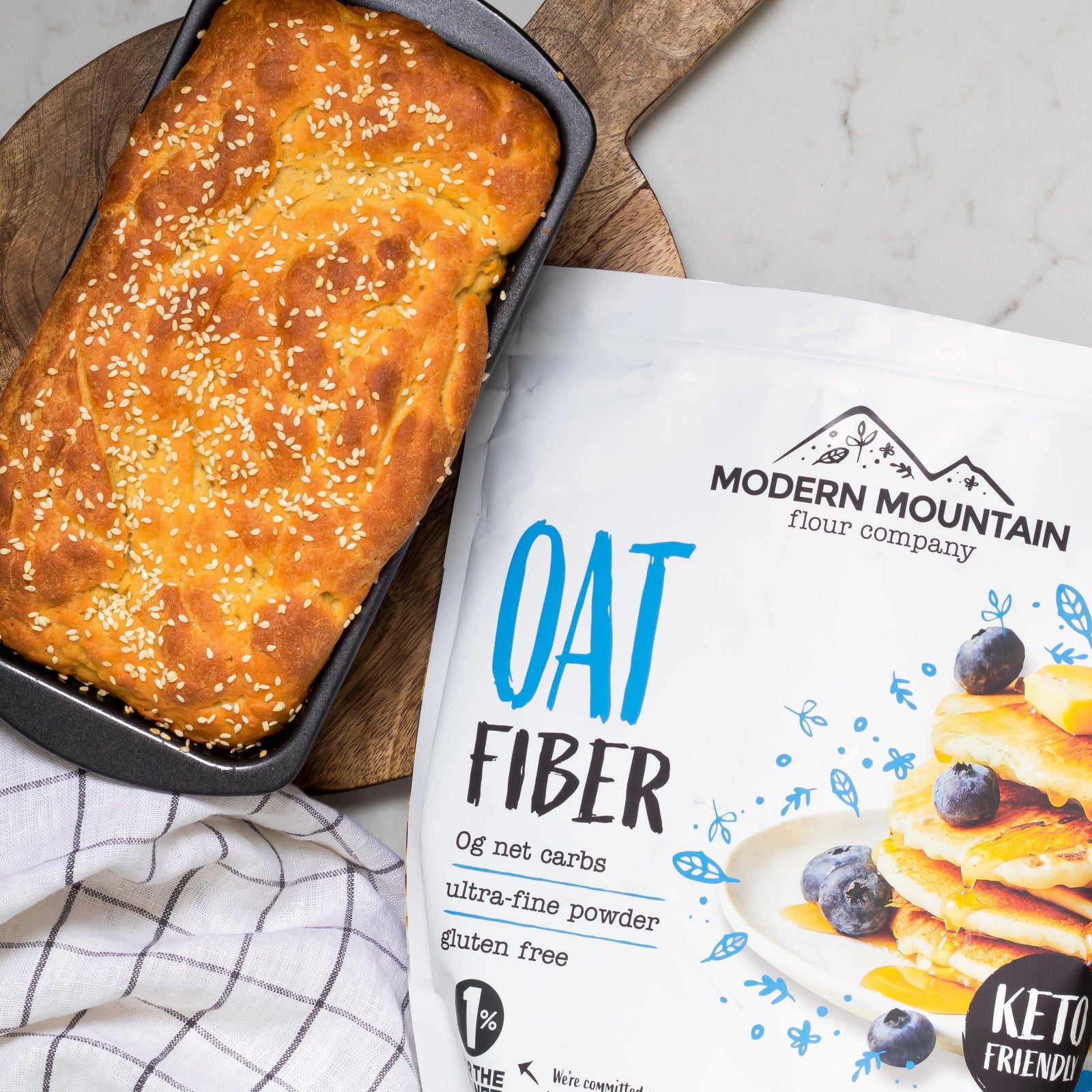
If your low-carb breads keep turning out dry and crumbly, oat fiber is the ingredient that fixes it - without adding net carbs.
What is oat fiber?
Oat fiber is made purely from the husk, the outer shell of the oat, ground into a fine powder. That's the key distinction: it comes from the husk, not the inner groat that rolled and steel-cut oats are made from. Because it's just the fibrous shell, it's essentially pure dietary fiber, with zero net carbs and nearly zero calories. It's mild in taste and ultra-fine, so it blends into batters and doughs without taking over.
Oat fiber vs. oat flour: what's the difference?
- Oat flour is a whole grain, made by grinding whole oats. It contains starch, so it carries carbs.
- Oat fiber is an ultra-fine powder from the oat hull only. It's pure dietary fiber, with no starch and no net carbs.
If you're baking low-carb, that difference is everything.
How does oat fiber have zero net carbs?
Net Carbs = Total Carbs - Fiber - Sugar Alcohols (or Allulose)
With oat fiber, 100% of the carbs are dietary fiber. Subtract that fiber back out and you're left with zero.
KETO MATH
Because every gram of carb in oat fiber is dietary fiber, the net-carb count lands at zero. That's what lets you add structure to a bake without touching your carb total.
What does oat fiber do in baking?
Its superpower is liquid absorption - it holds several times its weight in water. In practice that improves the texture and crumb of low-carb breads, adds bulk and structure keto flours often lack, holds moisture so bakes stay soft, and adds dietary fiber without carbs.

How do I use oat fiber?
A couple of tablespoons is plenty in most keto recipes. It pairs well with lupin flour (new to it? see our guide to lupin flour), almond flour, coconut flour, and golden flaxseed meal. Because it holds so much moisture, you may need to add a bit more liquid so the batter doesn't turn out dry. Beyond baking, it's handy as a thickener in smoothies, a binder in meatballs and meatloaf, and a low-carb coating for chicken.
What can I make with oat fiber?
- Keto waffles and pancakes
- Low-carb pizza crust
- Low-carb sandwich bread
- Keto bagels
- Keto fried chicken (as the breading)

Oat fiber vs oat flour vs psyllium husk: what's the difference?
| Oat fiber | Oat flour | Psyllium husk | |
|---|---|---|---|
| Made from | Oat husk (shell) only | Whole oats, ground | Psyllium seed husk (not oat) |
| Net carbs | 0g | Contains carbs (starch) | Very low |
| Fiber type | Insoluble | Mixed | Soluble |
| Effect in dough | Bulk, structure, holds moisture | Adds carbs + mild oat flavor | Gels and binds, adds chew |
| Flavor | Mild, neutral | Mild, oaty | Mild, earthy in excess |
| Gluten-free | Yes | Yes | Yes |
| Best for | Crumb of low-carb bakes, no carbs | Whole-grain (not low-carb) baking | Binding + chew in keto bread |
Approximate; check your package. They're teammates more than substitutes: oat fiber for bulk and moisture, psyllium for bind and chew, oat flour only when you're not counting carbs. Many low-carb breads use oat fiber and psyllium together.
What can I substitute for oat fiber?
No exact stand-in, because the near-zero net carbs + high water-holding combo is unusual. Psyllium husk adds fiber and strong binding but gels - use a fraction of the amount, expect chewier results. Golden flaxseed meal and chia seed meal add fiber and moisture with a milder effect (a little more flavor and carbs). Wheat bran works only if you're not gluten-free or strictly low-carb. Start with less than the recipe calls for and adjust liquid.
How to store oat fiber and how long it lasts
Shelf-stable and low-maintenance. Keep it airtight, cool, dry, and dark - moisture is its only real enemy, since its whole job is absorbing water. Stored that way it lasts a year or more. No need to refrigerate; just keep the scoop dry so you don't introduce moisture. Hard clumps or an off smell mean it's taken on humidity - replace it.
Is oat fiber good for you?
Oat fiber is almost entirely dietary fiber - the nutrient most of us fall short on. It's insoluble fiber (adds bulk, supports regularity) delivered with essentially no net carbs, calories, sugar, or fat - a way to raise fiber in a recipe without changing flavor or carb count. General guidance from the Mayo Clinic links a fiber-rich diet to easier digestion, steadier blood sugar, and support for a healthy weight. As with any big fiber increase, add it gradually and drink plenty of water. (General nutrition information, not medical advice.)
Can I make oat fiber at home?
Not really - milling the oat husk to an ultra-fine, food-grade powder isn't practical in a home kitchen. It's worth buying ready to use: shop Modern Mountain Oat Fiber.